
The festive season is one of the biggest opportunities for e-commerce brands to attract new customers, showcase seasonal offers, and boost online sales. However, with multiple brands competing for shoppers’ attention, simply running promotional ads may not be enough to drive meaningful results.
A well-planned Festive E-commerce Advertising Strategy connects every stage of the customer journey, from product discovery and engagement to retargeting and conversion.
By combining video advertising, native ads, and dynamic display campaigns, brands can create a more connected shopping experience that guides consumers from initial interest to completed purchases. When supported by audience insights, relevant creatives, and coordinated campaign execution, these formats can help businesses make the most festive shopping demand.
Why a Full-Funnel Festive E-commerce Advertising Strategy Matters
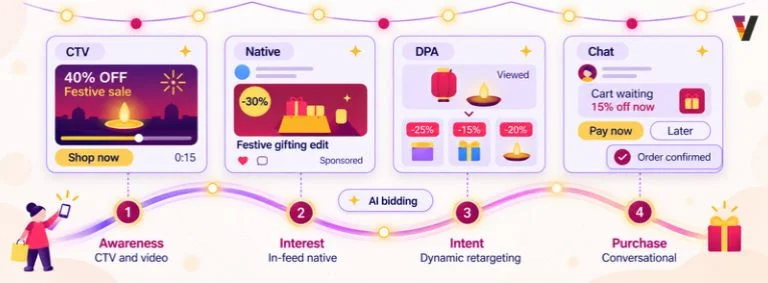
Festive shoppers rarely make every purchase after seeing just one advertisement. A customer might discover a product through a video ad, explore recommendations in their content feed, revisit an item through a retargeting ad, and eventually complete the purchase on an e-commerce website.
A full-funnel approach connects these interactions instead of treating each campaign as a separate activity.
By aligning advertising formats with different stages of the buying journey, brands can deliver more consistent messaging, improve audience engagement, and identify opportunities to increase conversions.
Platforms such as Vertoz can help advertisers coordinate digital advertising efforts and build more connected campaign experiences across customer touchpoints.
1. Build Awareness with High-Impact Video Ads
Video advertising helps brands capture attention, showcase products, and communicate festive offers through engaging visual storytelling.
During seasonal shopping periods, brands can use short-form videos, in-stream placements, and connected TV (CTV) advertising to introduce products and reach relevant audiences.
Example: An electronics retailer could launch a festive video campaign highlighting limited-period discounts on smartphones, laptops, and home appliances. Engaging visuals and clear promotional messages can encourage viewers to explore the featured products.
How to improve video ad performance:
Video ads help establish initial awareness and introduce products that shoppers may consider later in the festive season.
2. Encourage Product Discovery with Native Advertising
Once shoppers become aware of a brand, the next step is to encourage them to explore their products. Native advertising supports this stage by presenting promotional content in a format that fits naturally within the surrounding content experience.
Brands can use native ads to showcase gift guides, seasonal collections, product recommendations, and shopping inspiration.
Example: A fashion retailer could promote a festive style guide featuring traditional outfits, accessories, and occasion wear. Shoppers who engage with the guide can be directed to relevant product pages to explore the collection further.
How native advertising supports discovery:
When combined with video advertising, native ads can help move shoppers from awareness to consideration through a more natural discovery experience.
3. Re-Engage Interested Shoppers with Dynamic Display Ads
Not every shopper completes a purchase during their first website visit. Some compare prices, browse multiple products, or leave items in their carts before checking out.
Dynamic display advertising can help brands reconnect with interested shoppers by showcasing relevant products based on available browsing or product-interest signals, subject to applicable consent and platform capabilities.
Example: If a shopper views a pair of festive shoes but leaves without purchasing, a dynamic display ad may showcase the same product or similar options across participating advertising placements.
Best practices for dynamic display campaigns:
Dynamic display ads can keep relevant products visible to interested shoppers and encourage them to return when they are ready to buy.
4. Connect Every Touchpoint with AI-Driven Audience Optimization
Video, native, and display advertising become more effective when campaign decisions are informed by audience insights.
AI-driven intelligence can help marketers identify engagement patterns, understand product interests, refine audience segments, and optimize campaign decisions using the data and capabilities available to them.
For example, an e-commerce brand could introduce a festive collection through video ads, encourage further exploration with native content, and reconnect with product viewers through dynamic display ads.
Audience insights can help advertisers adjust targeting and creative messaging as campaign performance evolves.
Key opportunities for optimization include:
The objective is to deliver relevant messages at appropriate moments rather than repeatedly showing the same advertisement to every shopper.
5. Align Campaigns with a Cohesive E-commerce Marketing Strategy
An effective advertising funnel must connect with the wider online shopping experience. The offer shown in an ad should match the landing page, product availability, pricing, and checkout experience.
This alignment becomes especially important during the festive season, when shoppers compare multiple brands and expect a smooth journey from discovery to purchase. A well-planned e-commerce marketing strategy helps brands create consistent shopping experiences across advertising channels and touchpoints.
Ways to create a more connected e-commerce experience:
A unified approach helps marketers identify where shoppers lose interest, and which campaign adjustments may improve results.
Measuring Success Across the Festive Advertising Funnel
To evaluate a Festive E-commerce Advertising Strategy effectively, brands should measure performance at every stage of the customer journey.
| Funnel Stage | Advertising Format | Key Performance Metrics |
| Awareness | Video and CTV ads | Reach, impressions, video completion rate |
| Consideration | Native advertising | Click-through rate (CTR), engaged visits, product views |
| Re-engagement | Dynamic display ads | Return visits, clicks, assisted conversions |
| Conversion | Coordinated campaigns | Conversion rate, cost per acquisition (CPA), ROAS |
These metrics should be evaluated together rather than in isolation. A video campaign may increase awareness without generating immediate sales, while a display campaign may help convert demand created by earlier interactions.
Where feasible, consistent attribution methods and conversion tracking can help advertisers understand how different touchpoints contribute to campaign outcomes.
Conclusion: Turn Festive Browsing into Buying Opportunities
A successful festive campaign requires more than visibility and attractive discounts. Brands need a connected advertising approach that guides shoppers from discovery and consideration to purchase.
By combining high-impact video advertising, relevant native experiences, dynamic display retargeting, and AI-driven audience optimization, e-commerce businesses can create a more consistent customer journey.
A well-executed Festive E-commerce Advertising Strategy helps brands align campaign messages with shopper intent, measure performance across the funnel, and make informed decisions throughout the festive season.
With the right combination of creative storytelling, audience insights, and campaign coordination, brands can turn festive shopping interest into meaningful conversion opportunities.
Frequently Asked Questions (FAQs)
1. What is a Festive E-commerce Advertising Strategy?
A Festive E-commerce Advertising Strategy is a coordinated digital advertising plan designed to attract shoppers, promote seasonal products, re-engage interested audiences, and improve online sales during festive shopping periods.
2. How do video, native, and display ads work together?
Video ads help build awareness; native ads encourage product discovery, and dynamic display ads can re-engage shoppers who have previously shown interest. Together, these formats support different stages of the customer journey.
3. Why is retargeting important during the festive season?
Retargeting helps brands reconnect with shoppers who have viewed products or visited a website without completing a purchase. Relevant product recommendations and timely offers may encourage them to return and complete their transactions.
4. How can brands measure festive advertising performance?
Brands can monitor reach, impressions, engagement, click-through rates, conversion rates, cost per acquisition, and return on ad spend. Evaluating these metrics together provides a more comprehensive view of campaign performance.
5. How does AI-driven intelligence support festive campaigns?
AI-driven intelligence can help advertisers analyze audience engagement, refine targeting, personalize messaging, and optimize campaigns based on available data, platform capabilities, and performance insights.