
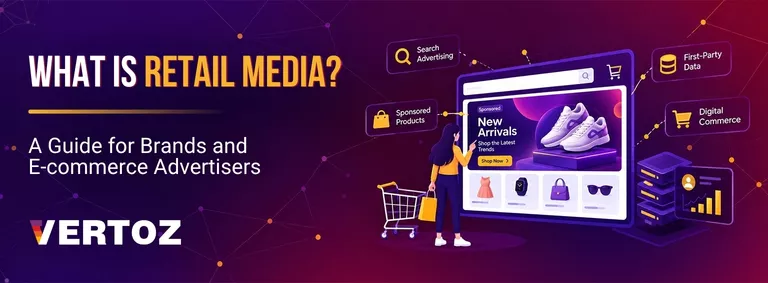
Retail media is advertising that runs on a retailer’s own websites, apps, and stores, using the retailer’s shopper data to decide who sees which ad. It puts your brand in front of people while they’re still choosing what to buy.
Picture someone typing “running shoes” into a retailer’s search bar. They aren’t window shopping. They want a pair soon, and the brand that shows up first has a real shot at the sale. If you sell online, that’s the moment you’re paying for it.
Understanding Retail Media and Its Rise
The retail media definition really is that simple: ads sold through a retailer’s own channels and powered by what that retailer knows about its shoppers.
Think about a physical store for a second. Retailers have always decided which products get the eye-level shelf and the end-of-aisle display. Online, that power didn’t disappear. It spread into search results, product pages, category pages, apps, emails, and pretty much anywhere a shopper might look.
Retailers noticed that brands would pay for those spots, and retail media networks (RMNs) were born. An RMN is the setup that lets a retailer or marketplace sell ad space to brands, with its first-party retail data steering the targeting and the reporting.
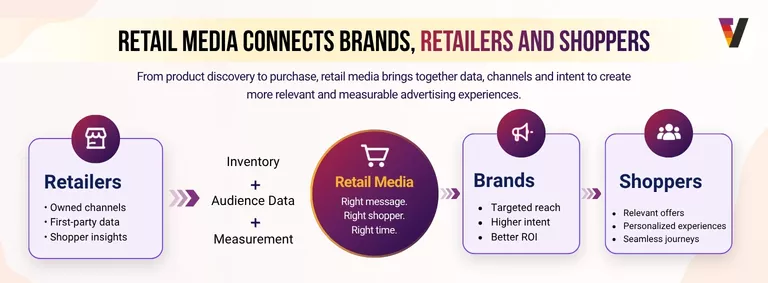
So, what is a retail media network, in one line? It’s the ad business a retailer or commerce platform runs on its own turf and, more and more, beyond it.
You’ve probably met retail media network examples without calling them that: sponsored results at big marketplaces, promoted products in grocery apps, featured items at department stores and specialist retailers.
Why Retail Media Networks Matter for Brands
Retail media works because of three things: shoppers who are ready to buy, data you can rely on, and reporting that connects ads to sales.
First-party data is information a company gathers straight from its own customers, like purchase history, browsing behavior, product interactions, and loyalty activity. Nobody’s guessing here, because the retailer saw what people actually did. Brands get to reach relevant audiences, and the retailer keeps control of their customer relationships.
Closed-loop measurement is the part ad teams tend to love. It means you can follow an ad view or click all the way to what came next: a product view, a conversion, a sale, the return on ad spends. Instead of wondering which ad did the work, you can look at.
Then there’s intent. A person with a mild interest in a product category and a person comparing three options right now are very different audiences. Retail media gets you in front of the second one.
How Retail Media Differs from Traditional Digital Advertising
Both traditional digital advertising and retail media networks put your message in front of shoppers. They just start from different places.
Traditional advertising is good at broad reach. Retail media is good at connecting you spend to what shoppers do when they’re ready to buy.
Core Channels Within Retail Media
Retail media advertising isn’t a single format. It shows up at a few different points in a shopper’s journey.
Most brands mix these formats. Pairing them with wider e-commerce advertising solutions keeps your digital shelf visibility working across the whole journey.
Strategic Best Practices for E-commerce Advertisers
A solid retail media marketing strategy chases profitable growth. Impressions on their own don’t pay anyone’s bills.
The Future of Retail Media
Retail media outgrowing sponsored placements. It’s heading toward a broader commerce media ecosystem that stretches across retailer sites, apps, physical stores, connected devices, and off-site ads.
For brands, the opportunity isn’t to buy more placements. It uses retail media services, retail data, and measurable commerce signals to make your ads more relevant and easier to hold accountable.
The strongest retail media marketing strategies will pair sharp targeting with good digital shelf work, disciplined budgets, and steady measurement. As retailers keep expanding their ad offerings, retail media platforms will play a bigger part in how you plan, run, and measure e-commerce growth.
If you want to help build your commerce advertising, Vertoz offers solutions for e-commerce media execution, audience intelligence, and campaign optimization.